Introduction
Browsing antique and charity shops in the UK, you’re almost guaranteed to find some kind of 1950s or 60s 35mm viewfinder camera. These are the types of camera this site was built for, everyday heroes; underappreciated and forgotten.
It’s all too easy to think these cameras are similar, not least because they do look very similar lined up in their ever ready cases, chrome and leatherette within. They are however, most definitely not the same…I’ve reviewed some which were amazing, some which were awful and some with enough personality to stand out.
This however, is not one of those cameras. This is an Agfa Silette, and it is most noteworthy for being ordinary. Take an average of every spec, every detail, of viewfinder cameras from this era, and the Silette is what would come out. The Silette is very ordinary, and I’m not so sure that’s a bad thing as we’ll discover.
This exact Silette, a “Type 3”, I found for as little as £5, hanging in its ever ready case from a bookshelf in an antiques centre, in perfect condition. For the chance to save a true everyday hero, this was an opportunity I couldn’t pass up.
Disclaimer: As you will know from my introduction to this site this will not be a technical or scientific review. Just my genuine impressions of the experience of shooting with this camera, how it makes me feel as a photographer and how it is to live with.
For a history of the Agfa Silette see: https://camera-wiki.org/wiki/Silette

Appearance
This camera, to my eyes, is not very distinctive. That’s not to say it doesn’t look good, it still has a lot of retro charm, there’s just nothing special that stands out.
You have the usual smooth chrome top plate, in this case broken only by a wide central viewfinder hump with a cheap feeling film rewind knob, with film reminder, to the left as you hold it and simple shutter button to the right.
The film advance winder is tucked away under the shutter button, near flush to the otherwise plain chrome-above-leatherette back. I do like the contour to the back panel though, it’s a nice touch. Hiding just below is the frame counter, a physical turning dial.
There is a chrome strip down one side for the door release catch, and a simple black hinge opposite.
The chrome base has just a tripod socket and film rewind release button, with a subtle “MADE IN GERMANY” mark.
The front is perhaps the closest we get here to the Agfa showing some personality with a subtly contoured chrome base to the lens assembly branded with the classic Agfa logo in one corner. It’s just surface printing but at this price point, that’s to be expected.
Speaking of the lens assembly it’s simplicity elevates things slightly. Relatively small and sleek, finished completely in chrome; it’s simple in a good way.
It’s also light, but not overly so. Overall this is Agfa successfully doing quality for the masses. It’s a camera that feels robust-enough, but built to a price point.


Controls
Here, as will become a theme in this review, everything is very “normal” on the Silette. From front to back on the lens assembly you have…
- A focus ring with a ~270degree throw. The range is 3.5ft to infinity with a hard stop at infinity but some travel past 3.5ft. It’s very light to turn, a bit too light for my liking, it feels cheap and perhaps too easy to turn accidentally. Conveniently distances are visible from the top as well as front due to the angle of the ring. Aperture numbers are visible on the front plate for scale focusing.
- A shutter speed ring. This turns with really nice “clicks” for each setting (Bulb, 1/25, 1/50, 1/200)
- An aperture selector which also turns with nice “clicks” for specific aperture numbers. These are visible on top too.
There’s a rather large viewfinder, comfortable even for me as a glasses wearer.
The film advance and shutter button are good enough, they feel robust but you can tell this was an entry level camera at the time. We’re a long way from the best feeling advance but it’s certainly good enough. It still feels mechanical unlike the worst-in-class.
There’s nothing else, not a self-timer, meter, or focus aid in sight.
Overall as standard as it gets and, much like my Zeiss Nettar was for medium format, that might just make this the perfect camera to learn manual 35mm photography with.


Loading and Unloading
The Agfa Silette is as simple and ordinary as loading this type of camera gets.
Open the back, place the film cassette under the rewind knob (which lifts up) and feed the film leader through the middle of the take up spool under the film advance lever. Check the film perforations are on the sprocket wheel in the middle and you’re ready to close the back.
Turn the frame counter on the back to the green triangle (for 36 exposure film), advance a couple of times and you’re good to go.
To unload, rewind the film holding the rewind button underneath then open the back and lift the rewind knob to free the film. I do wish the rewind button would lock in place but that’s a rare feature in this category.
Simple and straightforward, a great camera to learn the process.

Shooting Experience
Ordinary, easy and fun. The Silette is the perfect camera to learn manual photography.
Learn to scale focus and meter on your phone and you’ll be happy with this little Agfa.
set shutter — set aperture — wind on — focus — compose — release — repeat.
This particular camera came on two holidays with me and worked perfectly.
Some would say the limited shutter speeds on offer here are limiting but I’ve never felt limited by these basic “vario” shutters, it’s simply a matter for choosing the right film speed for the day and fine tuning exposure with aperture.
It’s not as satisfying to use as something like my Vito B, nor as eye catching as something like my Bella, but it does the job and does it well.
It’s simplicity and lower end build means I was never hesitating to take it out with me, this is a camera – then and now – built to be used, not to sit on a shelf.
The Silette is not a camera you will pick up because it’s exceptionally fun, nor exceptionally well engineered, not exceptionally stylish. On all counts, the Silette is good enough and no more. What the Silette is, is a perfect introduction to manual photography.
Gallery
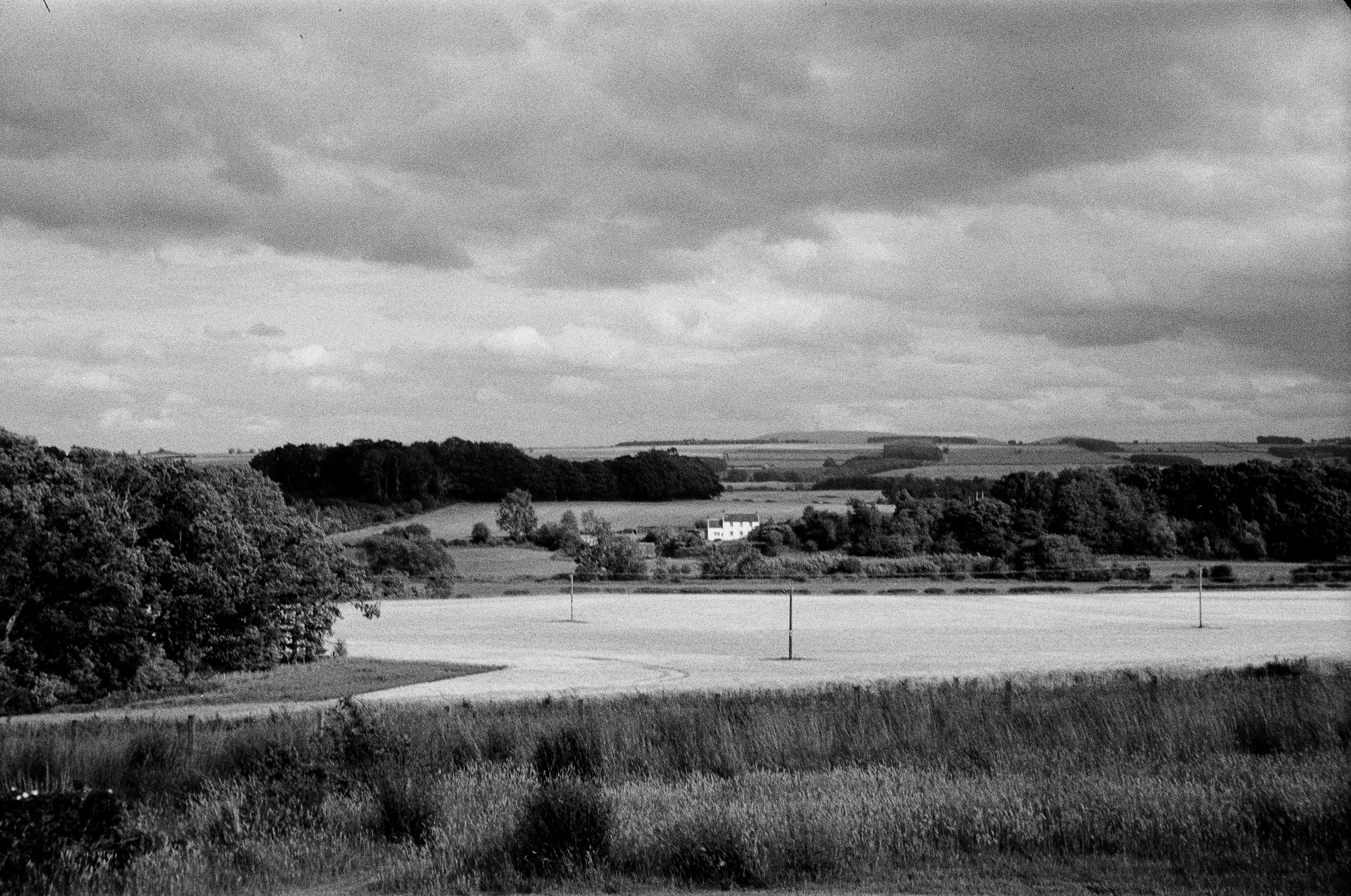
Photos below taken with my Agfa Silette.


Reliability
Disclaimer: Every vintage camera is different, and the condition of my specific example will likely differ from yours.
This is a cheap (then and now) 35mm viewfinder camera so we don’t have much here to break, there’s no light-seals to decay and no rangefinder to get out of alignment.
Entry level “vario” shutters, in my experience are pretty good at surviving without the CLA they really need. Of course accuracy is far from guaranteed so choose a forgiving film stock but that’s good advice for any old camera that’s not had a service. That said, they feel roughly accurate on my Silette.
The frame counter is simple and seems robust enough, as do all the lens controls.
Many Agfa cameras suffer from seizing, some the lubricants they used can solidify after decades of storage, most frequently locking the focus. Other brands can suffer from this too, but I have seen it disproportionately on Agfa’s (I’ve yet to find a non-seized Super Silette, a camera I’d love to try).
Here we have no such issues – all working perfectly. Just make sure you check any camera you find using our guide before you buy.
Overall reliability should be pretty good here considering the age and cheaper build. I’ve run a few rolls through this camera now and it’s worked flawlessly.
Lenses
The Color-Agnar 45mm f/3.5 triplet is classic in the best possible way. Get the focus right and stop the aperture down and you can get sharpness good enough for any realistic print size. The corners are softer, though not nearly as much so as you might think as long as you stick to the sweet spot (f/8-f/11). Flare resistance is also (relatively) good.
Of course this isn’t anywhere close to being one of the best lenses, technically speaking, of the day. Sometimes though, you don’t want the “best”, you want vintage character without sacrificing too much quality. And it’s this balance I think the Silette gets just right. Usable images, with all the vintage charm you could hope for.
Is it the best lens at anything? No, nor would you expect it to be. Is it good enough to have some fun? Absolutely, more than good enough.

Who’s It For
- People who want to learn manual 35mm photography
- People who want a cheap vintage camera to get started
- People who want a vintage camera to travel without worrying
Conclusion
I started this review saying ordinary wasn’t a bad thing, I think it’s more than that. I think ordinary can actually be the perfect thing.
Firstly, I love these cameras for their everyday entry level camera status. These were the cameras real, everyday people used. An average family in the 50s or 60s had probably never seen an expensive Leica or Contax, lovely as they are. Most would have discovered photography with a camera like the Silette. Trusted it with their treasured memories. Passed it down to their children so it survives today. These were the real cameras of the time, and that’s special.
Secondly, if you want to learn you want ordinary. Learn manual photography on a Silette and you’ll be comfortable switching to any other camera. It’s also the perfect combination of cheap, simple and robust.
More than that though, this is actually a genuinely good camera. It takes nice photos, with a lot of character, and it’s fun to use because of its simplicity.
There’s not much that stands out about the Silette, and maybe that’s precisely what makes it special.
Looking for other reviews, check them out here.
Ready to find your own forgotten camera, check out the guide.
Ready to get started learning manual photography, we’ve got a guide for that too.
